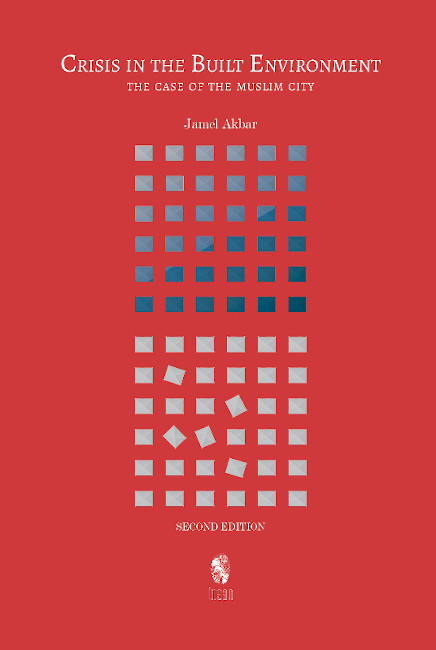
Crisis in the Built Environment: The Case of the Muslim City
Abstract Is it not time to search for paradigms beyond capitalism and socialism?
The book argues that interactions between the …
Read more
Professor at Fatih Sultan Mehmet Vakif University
Jamel Akbar (born 26 May 1954, Taif, Hijaz) is an architect, educator, and theorist. His theoretical contributions are in the field of the built environment. His major contribution is in measuring the quality of the built environment through concepts such as responsibility, control, ownership and interventions. His work concentrates on humans’ and properties’ rights among individuals, institutions and the State. By comparing such rights in different cultures he developed conclusions concerning economic and social settings and their ramifications on the quality of the built environment.
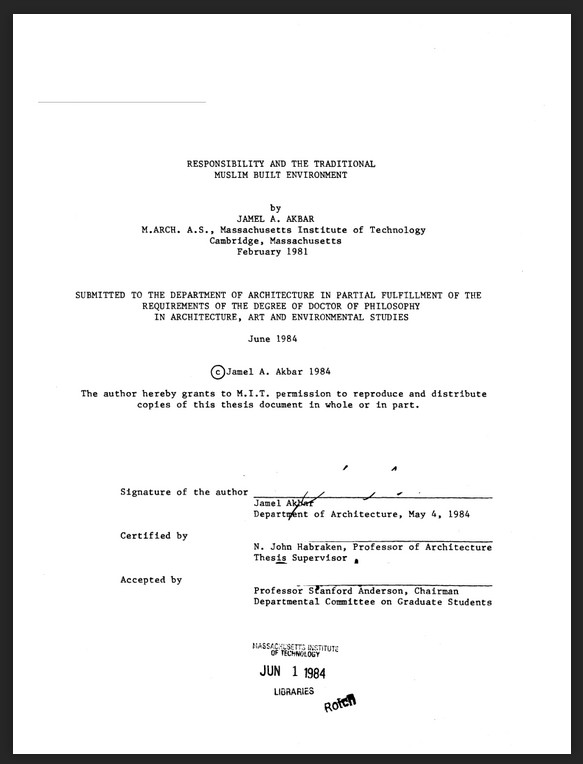
Jamel Akbar studied architecture at King Saud University, Saudi Arabia from 1972-1977. Then he went to Massachusetts Institute of Technology from 1978-1984 where he had both M.Arch.A.S. and Ph.D. degrees. During his studies at MIT, he had the chance to teach several courses with Prof N. John Habraken and Stanford Anderson.
Order printed copies of the books